Introduction: From Reactive Surveillance to Proactive Security
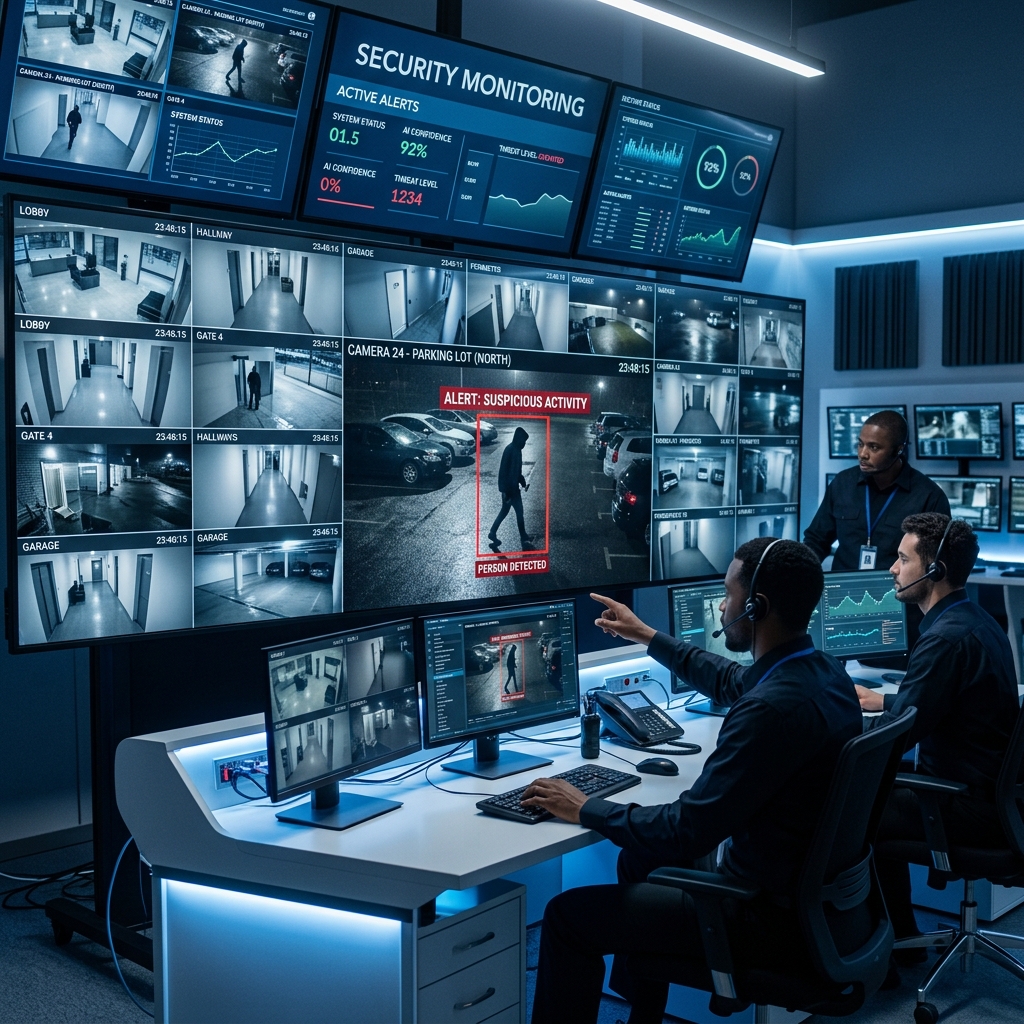
For years, businesses have relied on traditional CCTV systems and on-site guards to secure their premises. While these methods provide visibility, they are inherently reactive. Incidents are typically reviewed only after they occur, making it difficult to prevent losses in real time. Modern security demands a different approach. Remote deterrence transforms surveillance into a proactive system by combining artificial intelligence, real-time monitoring, and human intervention. Instead of simply recording events, it enables businesses to detect risks early and act immediately. This shift is not just technological—it is operational. Security today depends not only on cameras, but on how intelligently those cameras are monitored, analyzed, and acted upon.
What is Remote Deterrence?
Remote deterrence is a service-driven security model that integrates AI-powered video analytics with live monitoring teams. The system continuously analyzes video feeds to detect unusual behavior such as trespassing, loitering, or movement in restricted hours. When the AI identifies a potential threat, it sends an alert to trained operators. These operators verify whether the event is real and decide on the appropriate action. This may include issuing a live audio warning, activating deterrents like sirens, or escalating the situation to authorities. This layered approach—AI detection followed by human verification—is what makes modern surveillance effective. It ensures that responses are both fast and accurate.
How Modern Monitoring Services Improve Key Security Metrics
False Alarm Reduction: Traditional systems often trigger alerts based on simple motion detection, leading to a high number of false alarms. Modern AI software improves this by analyzing context, identifying objects, and applying behavioral rules. Events are then verified by human operators before escalation. Studies indicate that 94%–99% of traditional alarm activations are false alarms, while AI-driven verification systems can reduce these by up to 90–95% [1][2].
Response Time: Response time is improved through three stages—detection, verification, and intervention. AI detects anomalies within seconds, operators verify the event quickly, and deterrent actions are triggered immediately. Platforms like VerifAI report detection within seconds and response within 15 seconds under operational conditions [3].
Deterrence Effectiveness: Deterrence is achieved through real-time intervention. When intruders are confronted with live audio warnings or visible deterrents, they are far more likely to leave the premises. Some systems report prevention rates approaching 99% in controlled environments [3].
Cost Efficiency: Remote monitoring reduces the need for full-time on-site guards while maintaining 24/7 coverage. Businesses can reduce operational security costs by 30%–70% while also lowering theft-related losses. Average burglary losses have been reported at $2,661 per incident, highlighting the financial impact of prevention [4].
Case Studies and Real-World Results
Retail Sector: A deployment of remote monitoring systems reported over 60% reduction in violent incidents, more than 65% reduction in theft-related activity, and up to 85% decrease in shrink-related losses. These outcomes were achieved through AI detection, human verification, and live deterrence [5].
Construction Sites: Monitored surveillance with proactive audio deterrence has resulted in near-zero theft incidents in certain deployments, along with improved insurance outcomes and reduced vandalism [6].
False Alarm Reduction: Organizations implementing video-verified monitoring systems have reported reductions of up to 90%–95% in false alarms, improving operational efficiency and response credibility [2].
Why VerifAI, Powered by IVIS Security, Stands Out
VerifAI, powered by IVIS Security, combines advanced AI software with professional monitoring services to deliver proactive security. It is designed to work with existing infrastructure, making it a flexible and scalable solution. The system integrates detection, verification, and response into a unified workflow. AI identifies potential threats, operators verify them, and deterrent actions are executed in real time. This ensures accurate and timely responses. By combining technology with human expertise, VerifAI provides not just monitoring, but intelligent security outcomes. It represents a shift from passive surveillance to active prevention.
Conclusion
Remote deterrence represents a fundamental shift in how security is approached. By combining AI software, live monitoring services, and real-time intervention, businesses can prevent incidents rather than simply recording them. The true value lies in the system as a whole—not just the hardware. Intelligent monitoring services turn video into actionable insights, enabling faster responses, fewer false alarms, and better outcomes.
References
[1] Arizona State University, Center for Problem-Oriented Policing – False Alarm Studies
[2] Interface Systems – Video Verified Alarm Data
[3] VerifAI Platform – Performance Benchmarks
[4] FBI Uniform Crime Reporting (UCR) Program – Burglary Statistics
[5] LiveView Technologies – Retail Crime Reduction Data
[6] WCCTV – Construction Site Surveillance Case Studies